|
2012 U.S. Professor of the Year
Professor, OCW advocate, socio-economic diversity champion, one-pony pedagogy assailant, UDL believer, replicating education-research studies supporter.
|
|
|


|
HOME | NEWS | TEACHING | RESEARCH | STUDENTS | TEXTBOOKS | PUBLICATIONS | NEWS ARTICLES | CONTACT
|
|
Effect of geometry, loading, and elastic moduli on critical parameters in a nanoindentation test in polymeric matrix composites with a nonhomogeneous interphase |
|
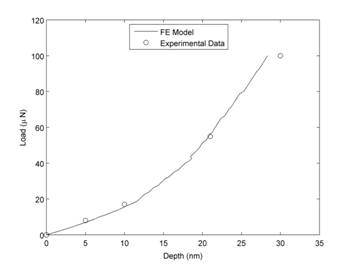
Fiber nanoindentation models
are developed for polym
Related Papers S. Garapati, A. Kaw, "Effect of Geometry, Loading and Elastic Moduli on Critical Parameters in a Nanoindentation Test in Polymeric Matrix Composites with a Nonhomogeneous Interphase", Composite Interfaces, Vol. 18, pp. 275–294, 2011. |